


How to Get Kids to Eat Dinner: 10 Tips for Less Mealtime Drama November 8, 2026 – Posted in: Dinnerware, Life Tips
SPATZ MINI PEEPS · A LITTLE HELP AT DINNER
You’ve made dinner. It contains actual ingredients, you used a chopping board, and for one glorious minute you feel like someone who has their life together.
Then your child looks at the plate and says, “I don’t like this.”
It is the meal they requested. Forty minutes ago. With considerable enthusiasm.
Welcome to feeding children: the only job where your customer can reject dinner because the pasta is “too pasta”, and you’re still expected to wash their pyjamas.
If you’re wondering how to get kids to eat dinner, a useful starting point is a predictable routine, manageable portions and less pressure. Children’s appetites and food preferences can change from day to day.[1]
Here are ten practical tips for helping your child enjoy dinner, with a little encouragement for the person who has to clean it off the floor afterwards.

1. Give dinner a regular time slot
A reasonably predictable pattern of meals and snacks gives children regular opportunities to eat. An afternoon snack can absolutely belong in that routine; you don’t need to make a hungry child wait for dinner to “teach them a lesson”.[1]
Think about what usually happens before dinner. Has the afternoon become one long snack service? Is everyone arriving at the table frazzled? Try a simple rhythm that works around your family’s day.
The schedule can survive a late swimming lesson. It’s a family routine, not an airport departure board.
2. Start small and offer an encore
Try a small first serving, with more available if your child wants it. A modest portion can be an easier place to start than a plate piled high.[2]
You are feeding a small person, not catering the annual bowls club dinner.
There is also something deeply satisfying about hearing “more, please” before you have delivered your opening speech on the nutritional importance of dinner.
3. Invite a familiar food along
Include something your child usually eats alongside the less familiar parts of the meal. Keep that familiar food available without making them earn it by tasting something else.[3]
For example, you might offer their usual rice with some of the family meal beside it, or familiar pasta with sauce available separately.
Imagine arriving at a party where you recognise absolutely nobody and someone immediately insists you mingle. Sometimes dinner needs a familiar friend.
4. Give them a tiny job and a small say
“What would you like for dinner?” can accidentally open a restaurant with a very demanding reservations department.
Try two manageable choices: “Would you like the sauce beside your pasta or in a little bowl?” A simple preparation job can also help children get involved. They might rinse vegetables, stir a cool mixture with supervision or put napkins on the table.[2]
Choose a task that suits their abilities and your remaining patience. Putting out three spoons counts. Nobody needs to supervise a toddler soufflé.
5. Let the sauce have its own postcode
Some children find mixed foods, textures or foods touching difficult. Offering parts of a meal separately, with a small bowl for sauce, can make the presentation more comfortable.[4]
You could set aside some pasta before mixing in the sauce, or serve the components of a rice bowl individually. Adjusting the presentation can let you use the same ingredients in a way that suits your child.
Same shopping list. A little more crockery. At least this is a problem your dishwasher understands.

6. Make their place at the table feel like theirs
Let your child choose a favourite plate, bowl or cup as part of setting the table. It’s a simple way to give them a little say in the dinner routine.[3]
At SPATZ, we take this part quite personally. Literally.
Our personalised kids dinner sets feature your child’s name and their chosen SPATZ artwork, printed in our Gold Coast studio. They can choose a design they love and have their own little setup for everyday meals.
The personalisation is for the fun and sense of ownership. We cannot promise a sudden romance with broccoli. We can put their name on the plate while that relationship takes its time.
7. Pull up a chair when you can
Eating together gives children a chance to see familiar adults enjoying food and makes room for conversation. Join them when it works for your family, even if the whole household can’t eat together every night.[5]
You, your child and a slightly wonky Tuesday dinner count.
Talk about something other than the food. Ask what made them laugh today, who would win a race between a duck and a dinosaur, or why there is a sock in the fruit bowl.
Actually, you may want to follow that last one up.
8. Give new foods time to become familiar
A child can get to know a food by looking at it, smelling it or touching it, when they feel comfortable. Offering repeated, gentle opportunities is more useful than turning every appearance into a compulsory tasting.[4]
You might describe what you notice: “That’s soft,” or “This one smells different.” Then leave room for their response.
They may describe a mushroom as a wet hat. This is a perfectly respectable contribution to the conversation, even if it will never make the supermarket’s advertising campaign.
A little permission to play with dinner
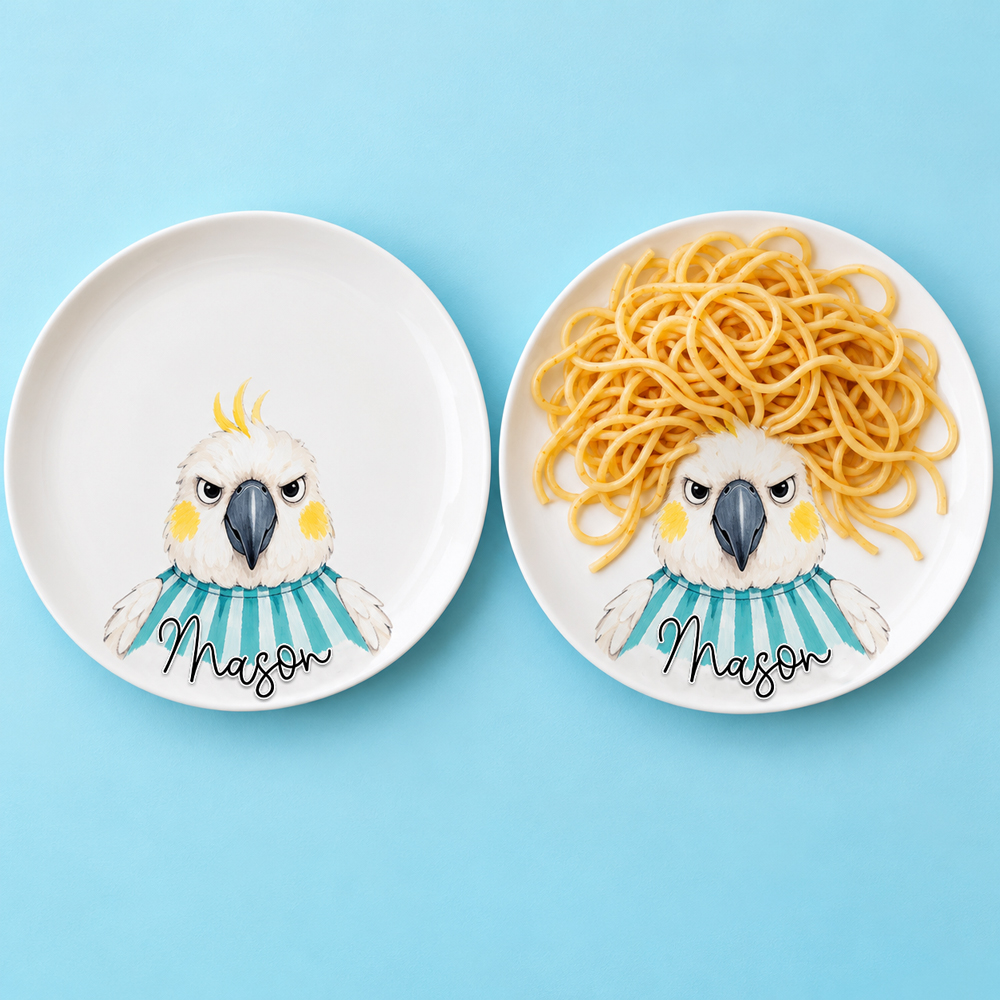
Spaghetti hair? Your dinner table is apparently a salon now.
Our personalised Play With Your Food Plates have illustrated scenes with space for food to become part of the picture. Your Mini Peep can arrange a little dinner on the design and add their own creative touches.
One minute you’re serving pasta. The next you’re being told the fringe needs more volume.
Keep it relaxed and let them explore at their own pace. The game doesn’t depend on clearing the plate.
9. Retire the running commentary
“One more bite.” “Your sister ate hers.” “Are you eating that?”
It is remarkably easy to become a sports commentator for someone else’s fork.
Try a calmer conversation and let fullness matter. For school-age children, the Royal Children’s Hospital recommends avoiding arguments over meals and dropping the expectation that they must clear the plate.[5]
Keep dessert out of the negotiations, too. Making it payment for eating another food can add pressure.[3]
Dinner already has enough admin without introducing a vegetable rewards programme.
10. Let their appetite have a vote
Your job is to offer food and regular opportunities to eat. Your child decides whether to eat and how much. Some evenings, that amount will be different from what you expected.[1]
A half-finished dinner can be frustrating after you’ve cooked it. It still isn’t a review of your parenting, your kitchen skills or the four loads of washing you also did today.
Choose one small change to try this week. A calmer start, a smaller serving or a little help setting the table is a perfectly good beginning.
Easy dinner ideas for fussy eaters
When inspiration has left the building, think about simple meals with familiar ingredients that can be served in separate parts. A few starting ideas:
- Pasta with options: pasta your child knows, with sauce and soft cooked vegetables alongside.
- A build-your-own rice bowl: rice, soft cooked vegetables and a protein food your child can manage, offered separately.
- Breakfast for dinner: scrambled egg, toast prepared to suit your child and a familiar accompaniment.
Adapt ingredients for allergies and food preparation for your child’s age and chewing skills. Keep young children seated and supervised while eating.[6]
Breakfast for dinner is also an excellent way to make eggs feel like they have been invited to an evening event.
When dinner needs a little extra support
If eating is painful or consistently distressing, the range of accepted foods keeps shrinking, or you’re concerned about nutrition or growth, speak with your GP or child health nurse. Repeated coughing, choking or difficulty swallowing also needs professional assessment. They can help you find the right support, which may include a paediatric dietitian or speech pathologist.[7] [8]
You deserve help with this. So does your child.

A few questions from the dinner table
How do I get my child to eat dinner without a battle?
Start with a regular meal routine, manageable portions and a familiar food. Offer choices where practical, keep the atmosphere calm and let your child decide how much to eat. Avoid forced bites or a clean-plate rule.[1] [2]
Can personalised kids plates help with fussy eating?
A favourite plate can make their table setting feel special and give them a choice in the routine. Personalised dinnerware cannot guarantee that a child will eat more or overcome feeding difficulties. Choose it for the enjoyment and everyday usefulness.
Are SPATZ melamine dinner sets dishwasher safe?
Our classic personalised melamine dinnerware is top-rack dishwasher safe and must not go in the microwave. Follow the care instructions for each item, including any silicone extras. See the classic dinner set details.
A little more personality at the dinner table
Whether dinner is pasta, a family favourite or Breakfast: The Evening Edition, there’s something lovely about having a little place that’s unmistakably theirs.
Explore our personalised kids dinnerware, choose their favourite SPATZ design and add the name of your household’s most enthusiastic snack consultant.
Choose their very own SPATZ dinner set →
For dinner with a creative twist, take a look at our personalised Play With Your Food Plates, too.
We’ll bring the personality. You bring the dinner.
Helpful reading for parents
The practical feeding suggestions in this article draw on the Australian health resources linked throughout. You can read more here:
- Raising Children Network — Healthy eating habits for children
- Raising Children Network — Fussy eating: what to do
- Pregnancy, Birth and Baby — Fussy eating in toddlers and children
- Sydney Children’s Hospitals Network — Introducing new foods
- Royal Children’s Hospital Melbourne — Nutrition: school-age children
- NSW Health — Helping to prevent children from choking
- Sydney Children’s Hospitals Network — Typical and problematic feeding
- Western NSW Local Health District — Paediatric feeding
